


Christmas Traditions in Alsace
Alsace is a region rich in traditions, which make it unique. Christmas in Alsace has a number of typical features that are widespread today. Here you will find some of these traditions and their meaning.
The Advent Wreath:
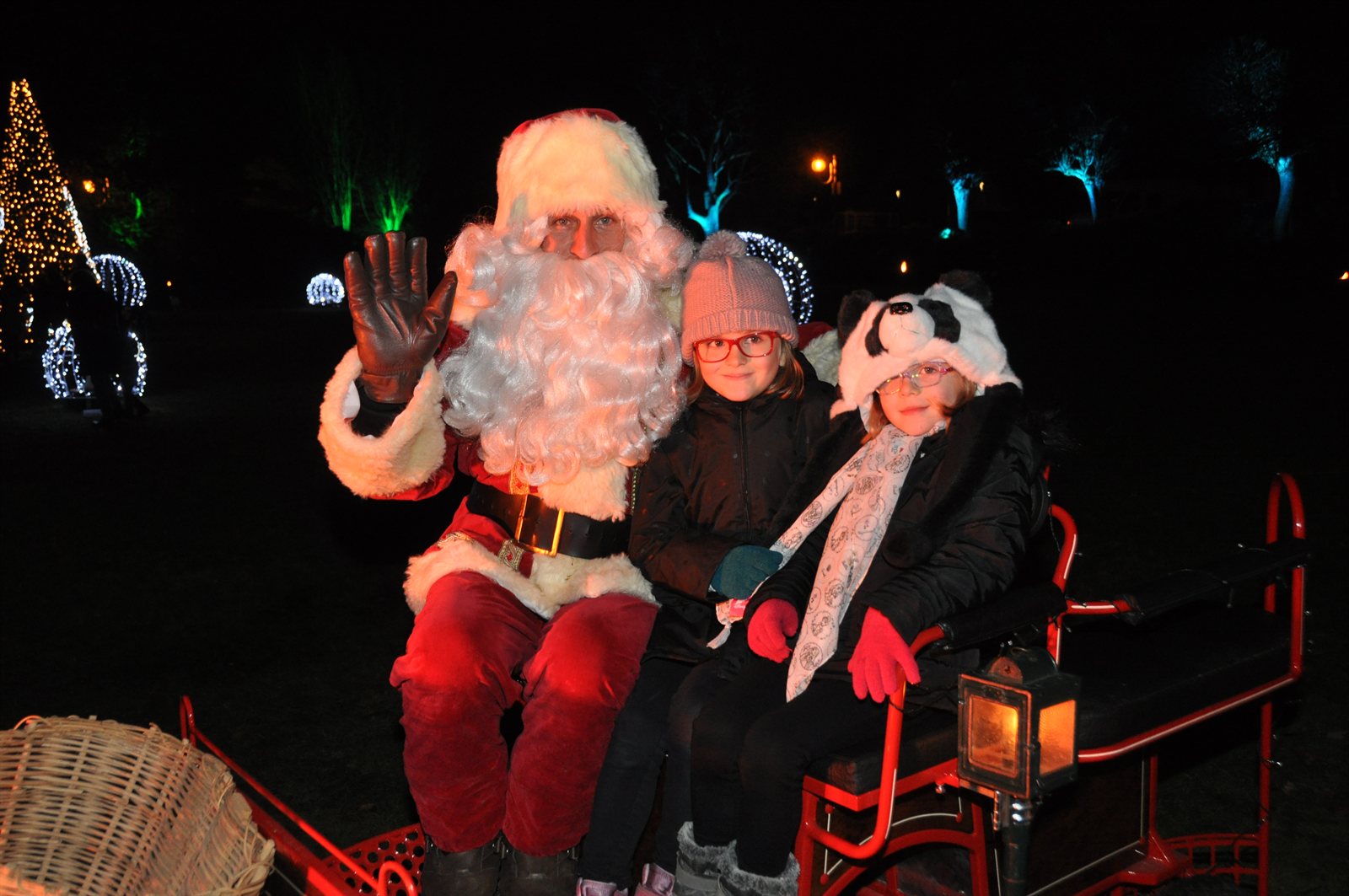
It symbolises the period leading up to Christmas and begins on the Sunday closest to Saint Andrew's Day. It is decorated with four candles, the emblem of the wait for the birth of Christ; a symbol of hope and light.
You will discover wreaths of all kinds, most often adorned with fir branches, cinnamon sticks, slices of lemon or orange, not forgetting the angel who protects us.
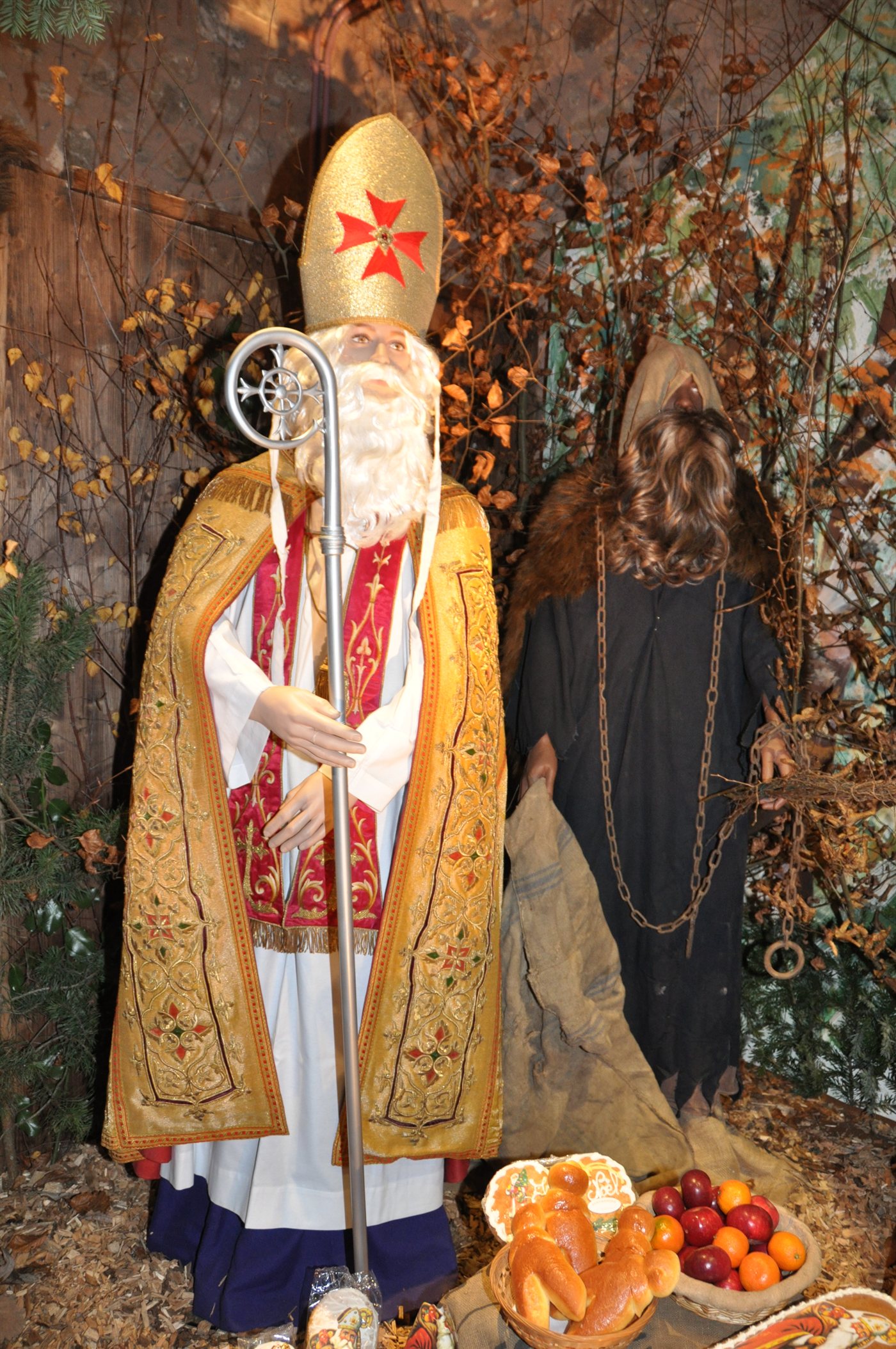
Saint Nicholas
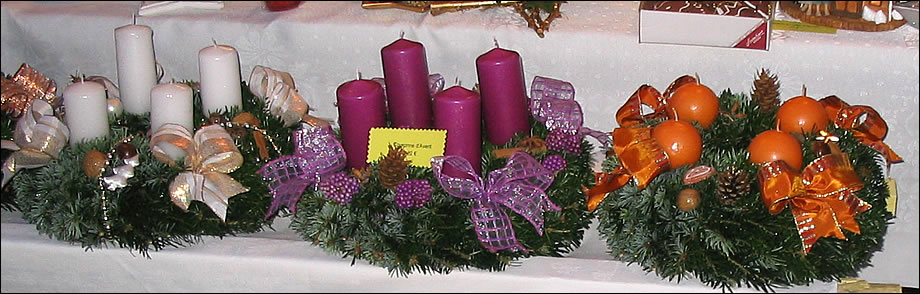
Saint Nicholas, celebrated in Alsace and Lorraine, remains a legend for children. They put their boots in front of the door so that Saint Nicholas, patron saint of schoolchildren, brings them sweets, gingerbread and clementines on 6 December.
But let's not forget our brioche "Männele", which is also one of the symbols of this celebration.
One of the legends of Saint Nicholas:
Legend has it that the saint brought back to life three little children who had come to ask a butcher for shelter.
The butcher took them in and, while they slept, cut them into pieces and put them in the salting tub.
Seven years later, Saint Nicholas, passing by, asked the butcher to serve him this seven-year-old salt pork.
Terrified, the butcher fled and Saint Nicholas brought the children back to life.
Father Christmas:
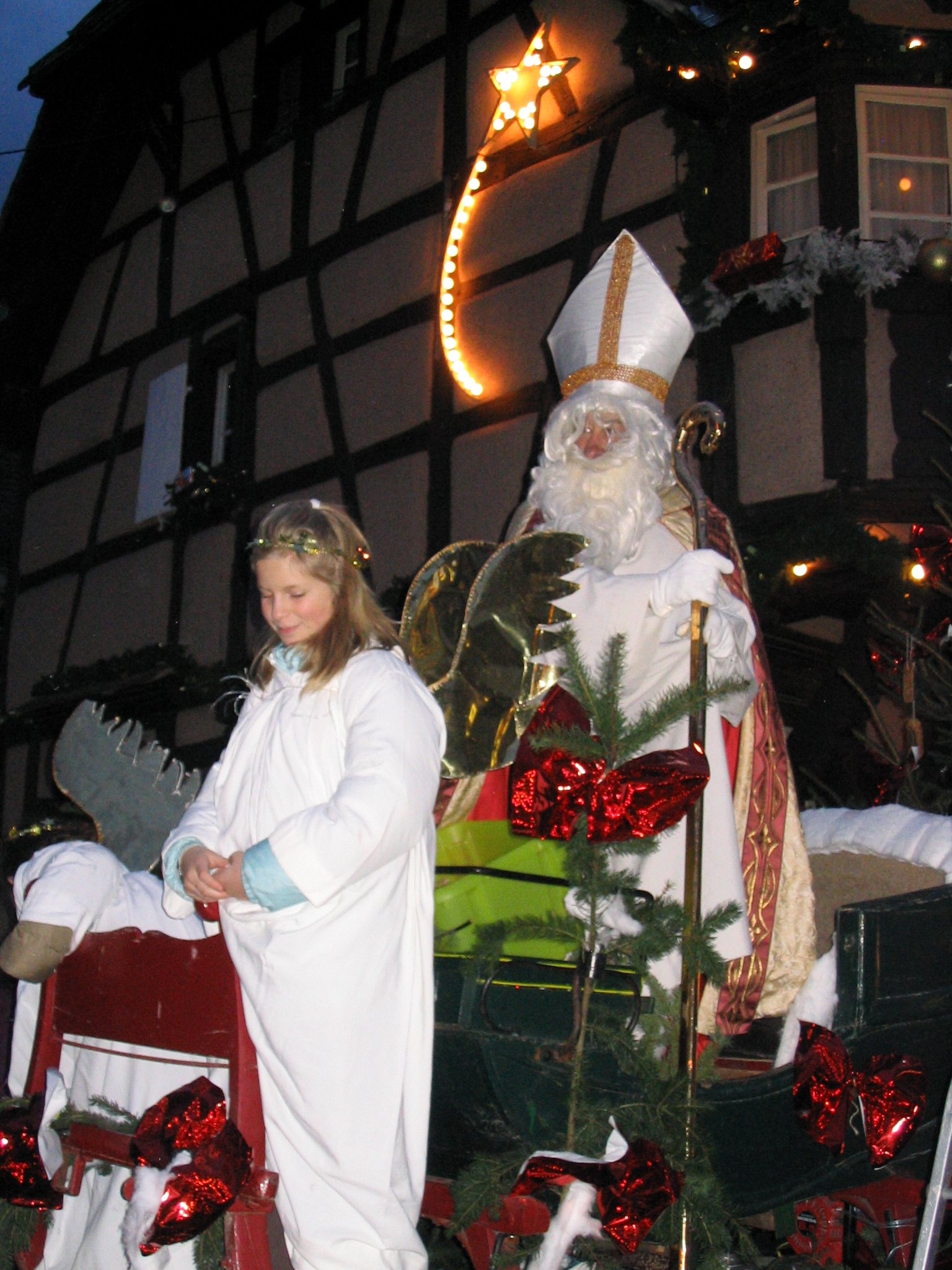
Who, as a child, was not dazzled by this mythical man who made us dream and kept us awake for hours, so eagerly did we wait for him? We watched for him at the window to see him arrive on his magnificent sleigh, and what a disappointment the day we learned that this man, admittedly very old, is in the end only a dream in every child's life.
His all-red suit and his sack full of sweets and clementines are as charming as ever and are very often feared by children who have not always been good.
He remains firmly rooted in our traditions and is part of everyone's dream.
His address is known to all; yes, the letter to Father Christmas remains a family tradition and lets children choose their presents.
Christkindel – Père Fouettard – Hans Trapp
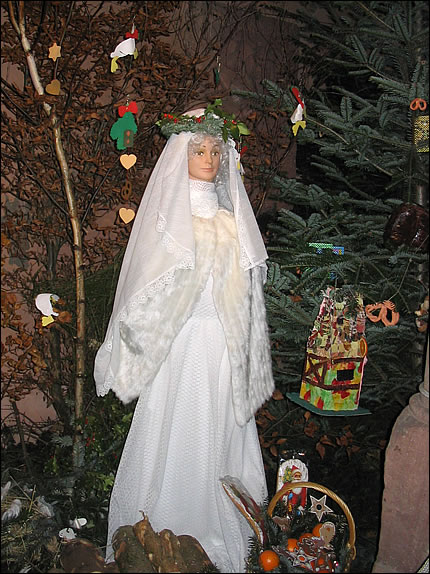
These three characters are also part of the Christmas myth. The Christkindel is associated with the image of a gentle young woman dressed all in white, representing the enchantment of the many Alsatian legends.
She is often accompanied by Père Fouettard or Hans Trapp, to frighten the children.
These legendary characters, seen less and less nowadays, were meant to frighten children and turn them into little angels during the Advent season.
The Christmas tree:
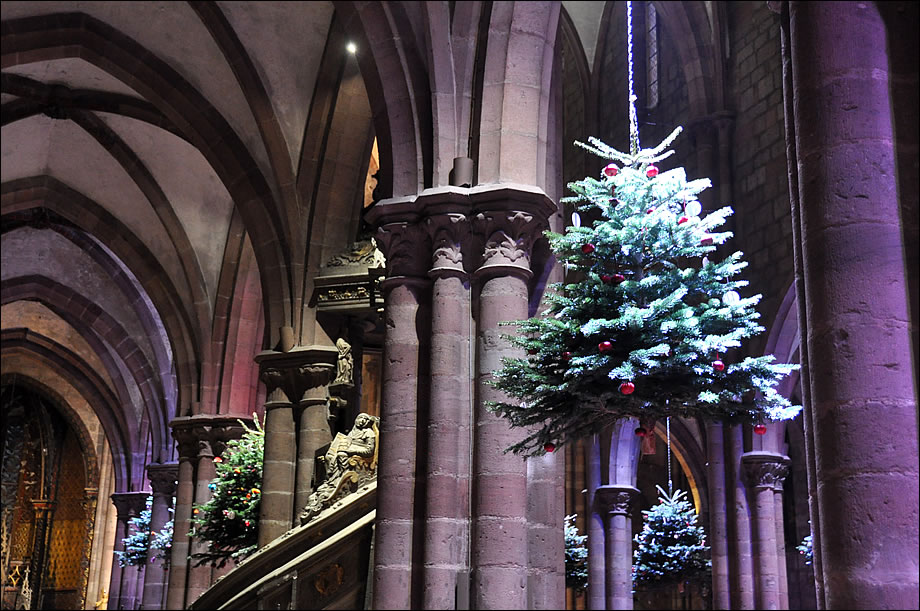
Another symbol of Christmas, this tree, which we adorn with the finest decorations, allows everyone to experience the magic at home. At first the tree was decorated only with apples and communion wafers, whereas now we decorate it as we please.
Today every village and every town has one or more trees decorated in wonderful ways.
The nativity scene:
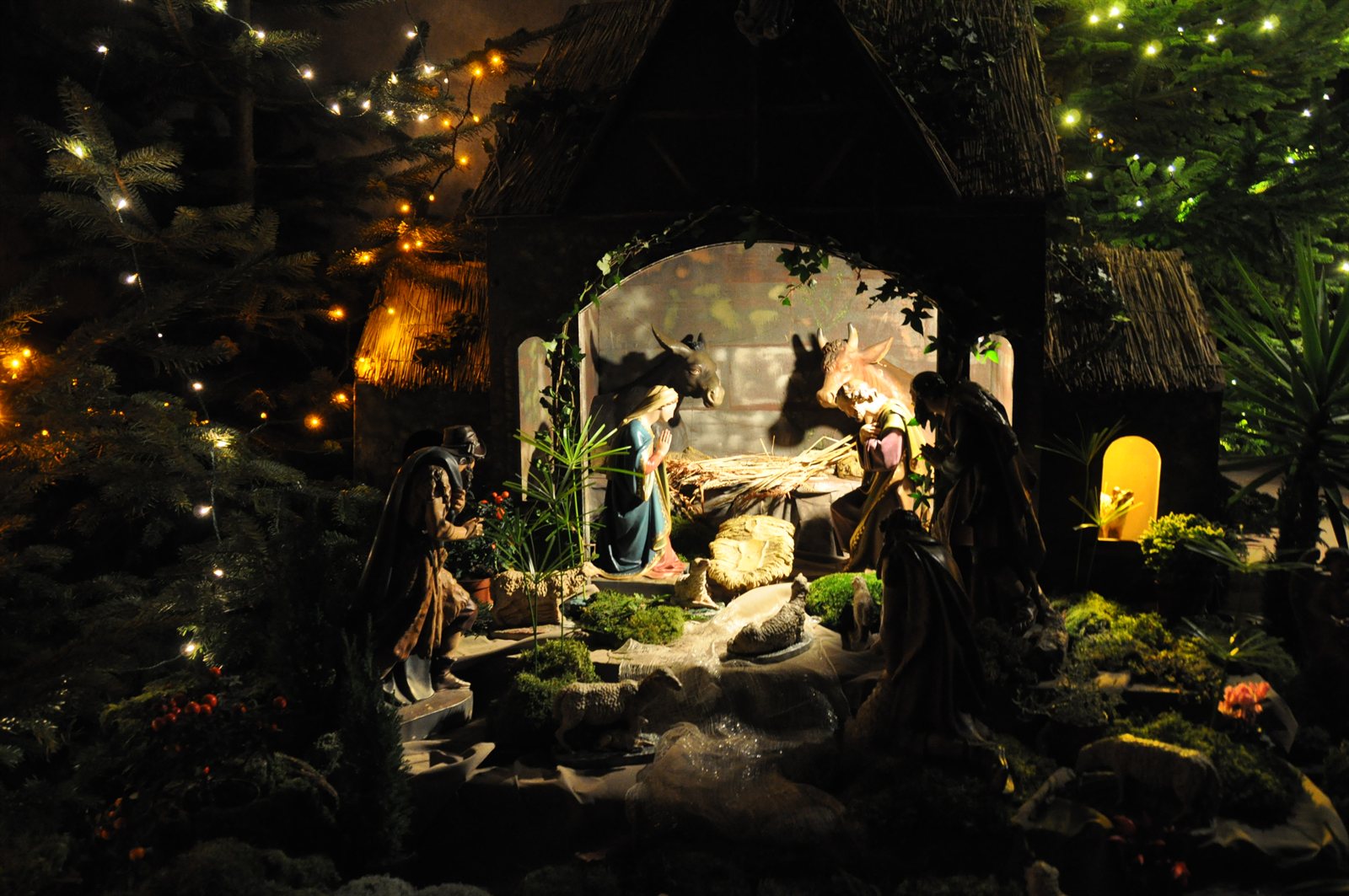
Representing the Nativity of Christ, the nativity scene remains an important element of Christmas. Custom has it that the baby Jesus is only placed in the crib after the twelve strokes of midnight, and that the Three Wise Men bringing their gifts are moved a little closer each day.
Increasingly rare, living nativity scenes let you relive this birth, a symbol of joy and hope.
Midnight Mass:
On this festive evening of waiting, it represents deliverance as well as joy and praise to the Virgin who gave birth to the baby Jesus.
Christmas markets:
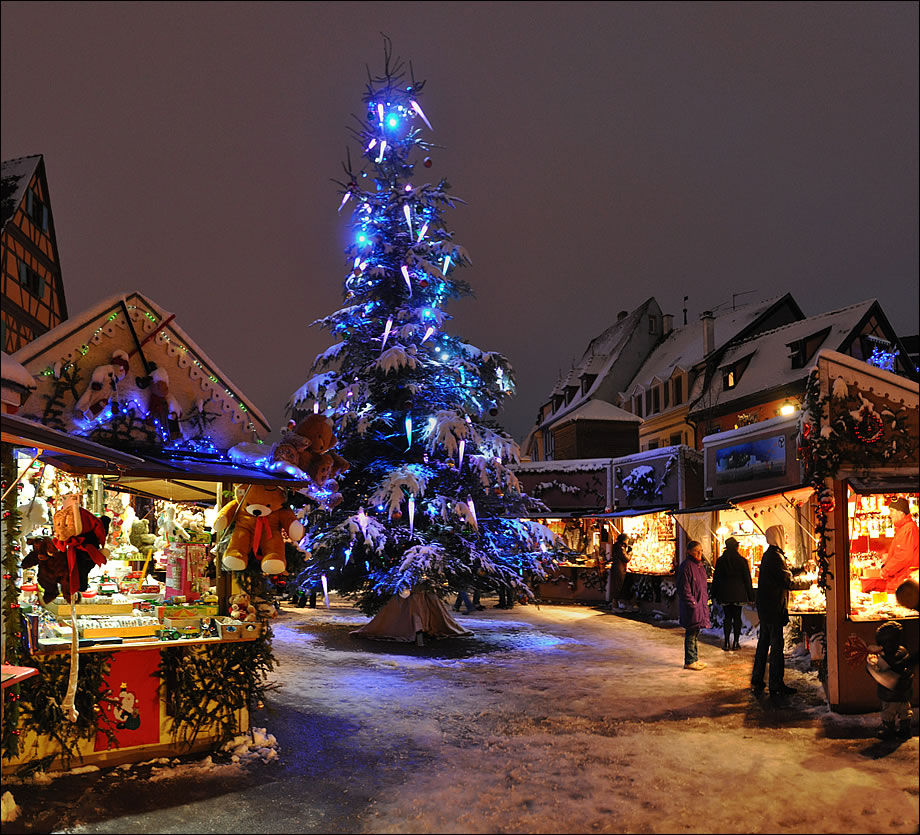
Christmas markets are the tradition of Alsace and appear at the same time as the start of Advent.
At first, Christmas markets were only held in the big cities; today they reach right into our countryside to bring their magic there. They are often enlivened by living nativity scenes and Christmas legends.
The scents of mulled wine and Christmas bredele will welcome you and guide you throughout your visit, where you will discover decorations for your tree, nativity scenes, santons, crafts of all kinds and, of course, magnificent wooden toys.
Illuminations:
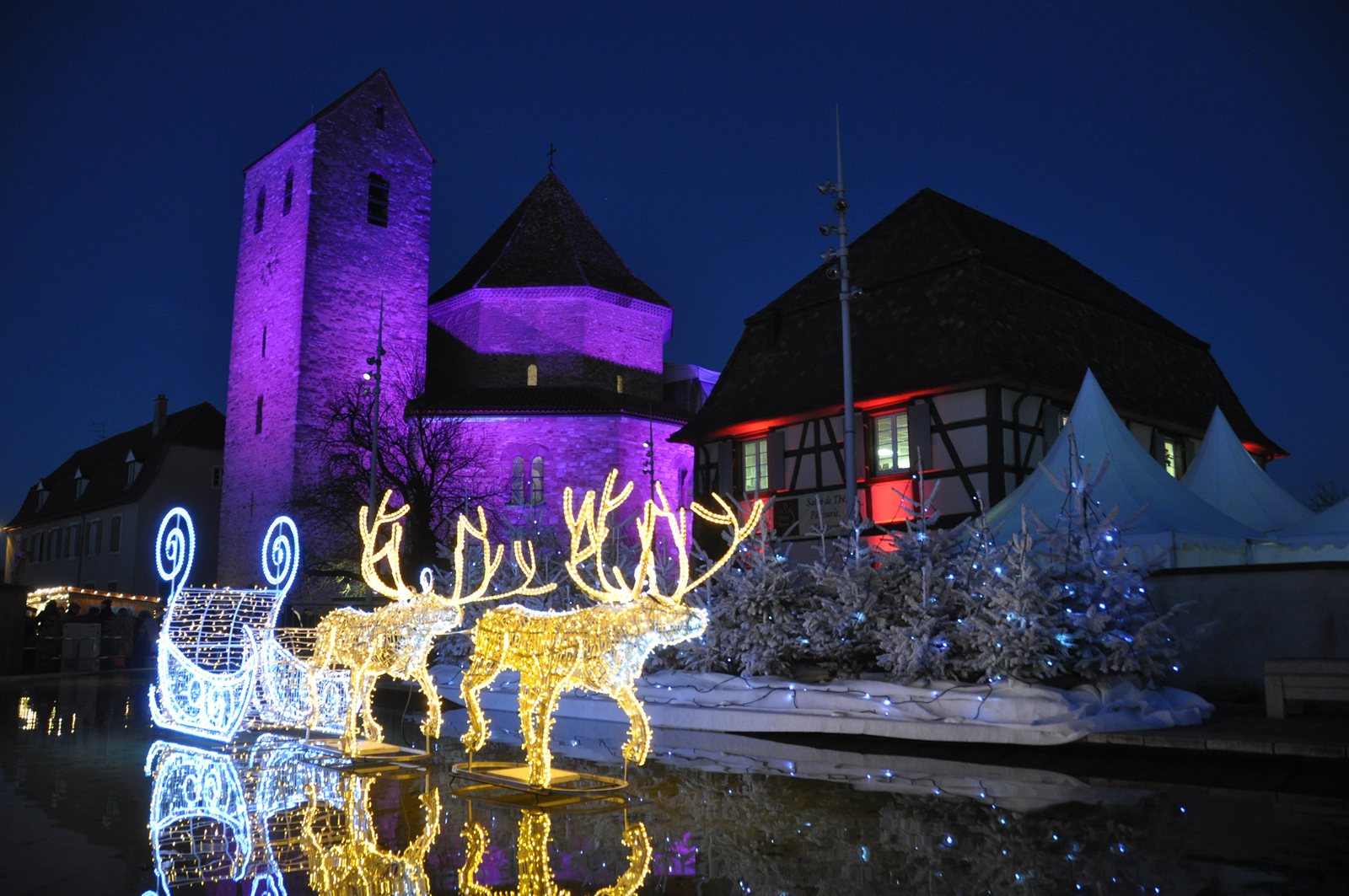
During this festive season, as you travel the roads you will see magnificent decorations, whether the municipal illuminations, which work wonders, or the decorations of houses created by the residents themselves, which turn them into festive places.
Let yourself be carried away by these beautiful sights that bring out the child in you. You will see Father Christmases climbing walls to reach the chimney, reindeer and sleighs and lots of other wonders.
Would you like to discover an illuminated forest? Then head to Grendelbruch, where you will experience a magical moment.
Tales and legends
Let yourself be lulled by the stories of the gnomes and elves of Alsace, who will very discreetly tell you their tales and also how they prepare for Christmas.
The beauty, but also the sadness, of some tales will bring back the child in you and delight the little ones.
Epiphany and the Three Wise Men:
Celebrated on 6 January, Epiphany commemorates the arrival of the Three Wise Men, Caspar, Melchior and Balthazar, who acknowledge the birth of the Messiah by offering him gold, frankincense and myrrh.
Having become the Feast of Kings, Epiphany is symbolised by a cake in which a bean is hidden to designate the king or queen of the day.
A tradition particularly popular with children lives on: generally, a child hidden under the table distributes the slices without being able to see where the bean is and names the recipient of each one.
Alsatian cuisine at Christmas
The Christmas season in Alsace is rich in culinary traditions. Many typical regional specialities, both sweet and savoury, are prepared for the occasion. They add to the conviviality of the festivities and the pleasures of the table.
Sweet Christmas treats
The most famous of these traditions is of course the bredele! These little Christmas biscuits come in a wide variety of shapes and flavours. The simplest are Butterbredele, little butter shortbreads cut out with biscuit cutters. Other recipes use hazelnuts, almonds, dried fruit or chocolate.
Among the traditional varieties, Spritzbredele are elongated and contain ground hazelnuts or almonds, while Anisbredele are flavoured with aniseed and topped with sugar icing. Cinnamon and other spices are also among the traditional ingredients.
Finally, you can also easily find versions filled with jam, topped with dried fruit or coated in chocolate.
In many families, making bredele is a real ritual, with recipes handed down from generation to generation. Several varieties are made to share with loved ones, offer to friends or give as gifts. Of course, everyone is convinced they have the best recipe and finds their own the best… but won't say so!

Gingerbread, of which Läckerli is a well-known speciality, also holds an important place among Christmas treats. You will probably have the chance to discover Christstollen (or Stollen), a cake made with dried or candied fruit and sometimes marzipan.
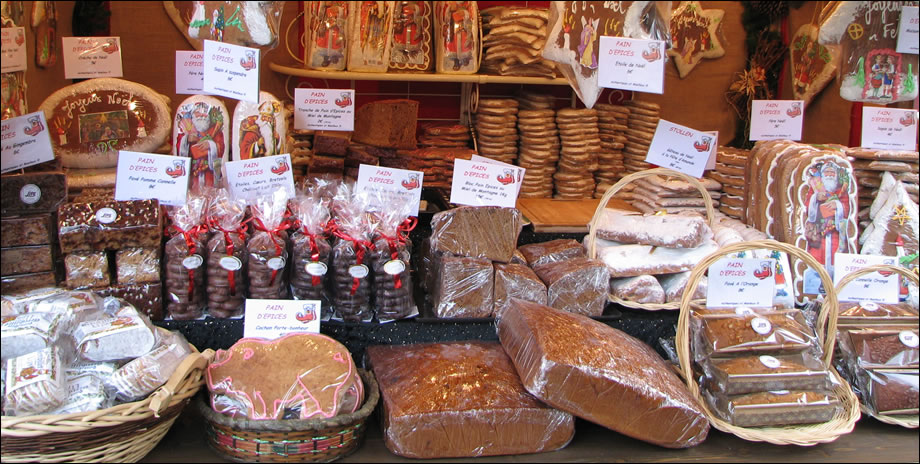
Berawecka, for its part, is made of a mixture of dried and candied fruit, flavoured with liqueur and bound with dough.
The traditional Koughelopf is also very much in evidence at this time of year.

Finally, Saint Nicholas' Day, celebrated on 6 December, is very popular in Alsace and sees the appearance of Mannele, a brioche shaped like a little man, sometimes topped with chocolate chips for those with a sweet tooth.
Savoury festive dishes
Among the great classics of regional cuisine, you will find choucroute garnie (sauerkraut served with sausages and cured meats) and baeckeoffe, a dish of beef, pork and lamb marinated in white wine, then slow-cooked with potatoes for several hours.

Fish also has its place on festive tables. In the Sundgau, in southern Alsace, fried carp is an emblematic speciality. You can also enjoy sauerkraut served with fish, such as pike-perch, or prepared with several kinds of fish.
Christmas drinks and Alsace wines
Drinks also add to the festive side of Christmas. At Christmas markets, spiced mulled wine is a must. Hot apple juice and hot chocolate are also a good way to warm up on winter walks.
At the table, Alsace white wines are highly prized. Crémant d'Alsace is often served as an aperitif, while Gewurztraminer and Pinot Gris may be served as an aperitif or to accompany certain dishes or desserts, particularly in their late-harvest versions.
To accompany the meal, Riesling is often considered a wine of great nobility, but Sylvaner and Pinot Blanc also have some pleasant surprises in store.
Finally, Alsace has a long brewing tradition. As the festive season approaches, many brewers offer Christmas beers, often amber and with spicy notes, which pleasantly complement the flavours of the season.